
EasyIDM - a Model-Driven IAM & IGA Platform Built Around Your Processes
Identity governance that adapts as your organisation changes – without waiting on a developer.
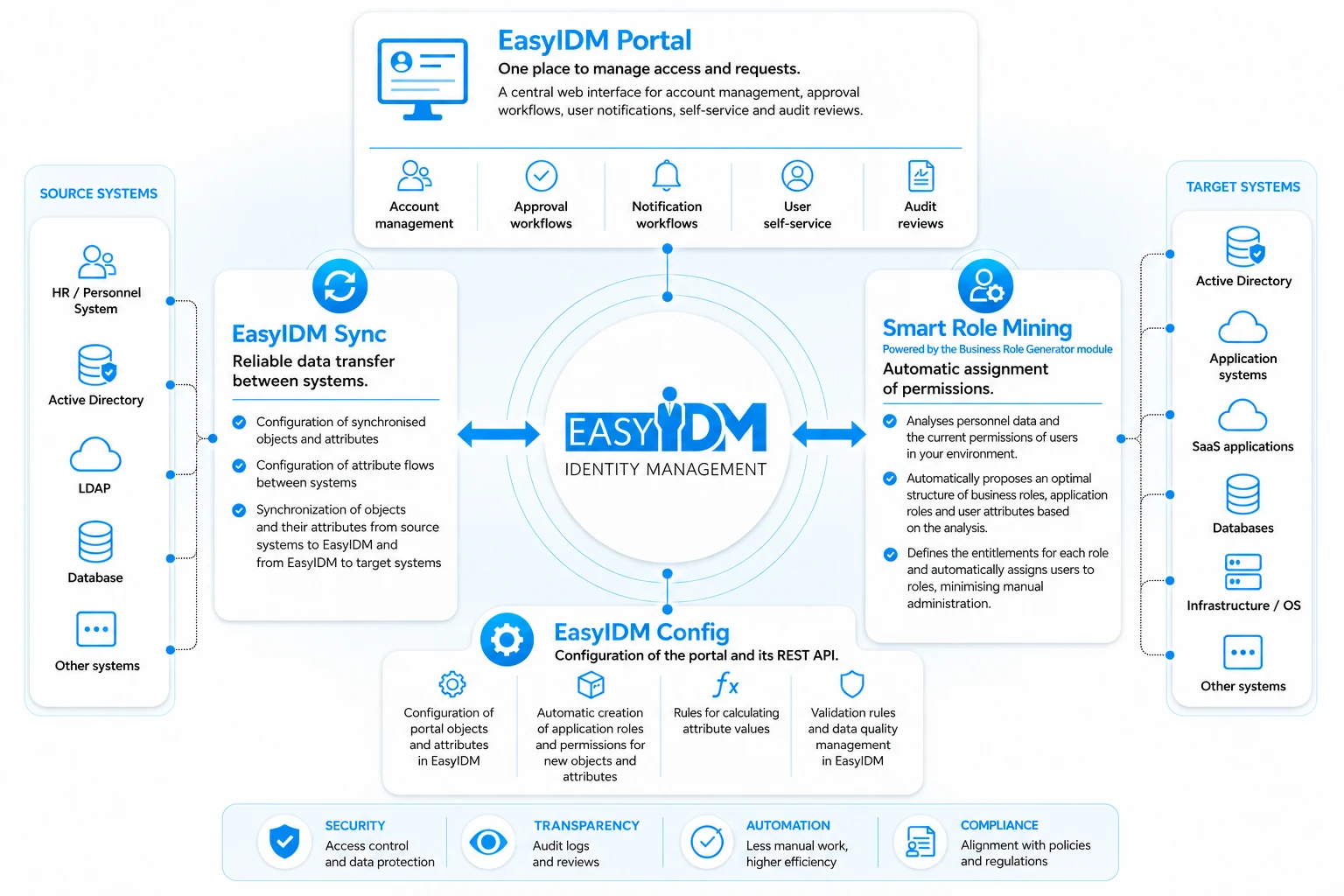
Most identity platforms ask you to adapt to their logic. We built EasyIDM the other way around: you describe how your organisation actually works, and the platform configures itself around it – new object types, attributes, roles, and workflows, all through configuration rather than custom code.
Underneath that flexibility sits everything you would expect from a modern IAM/IGA platform: identity lifecycle management, business roles, identity governance, and Segregation of Duties (SoD) controls.
Why We Built It Differently
Traditional IAM systems tend to work well on day one and get harder to maintain from day two onwards – every new role, exception, or process tweak means opening a ticket with a developer. We took a model-driven approach instead:
- Configure, don’t code. Workflows, access rules, and roles are defined directly in the interface.
- Extend the data model in minutes. Add new object types (e.g. a contract, a location) or account types, define their attributes and validation rules – the platform automatically generates the corresponding access rights and a secure REST API.
- Connect fast. A library of pre-built, configurable connectors (Active Directory, LDAP, SAP BAPI, SQL databases, and more) links EasyIDM to your existing infrastructure without a heavy integration project.
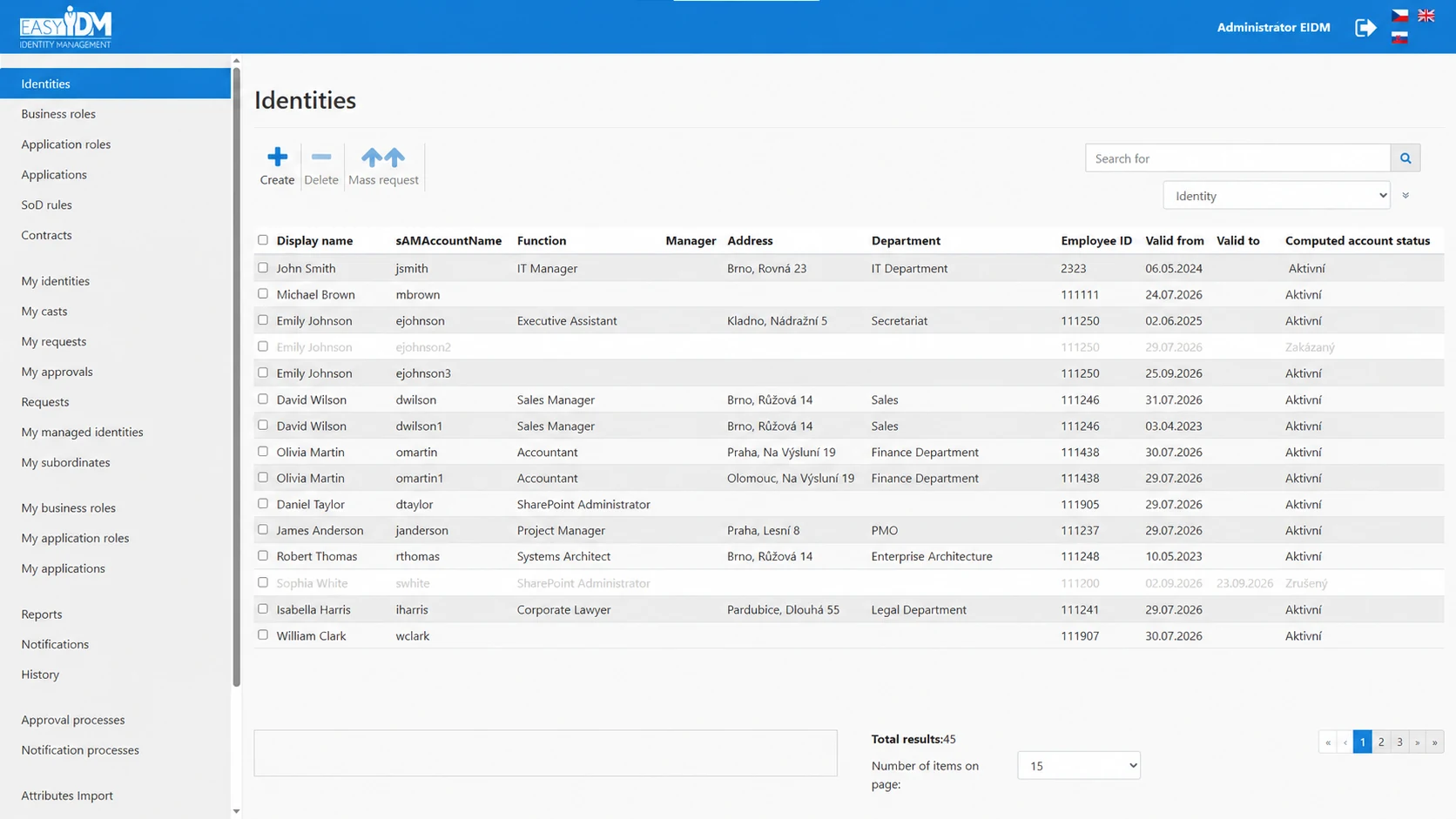
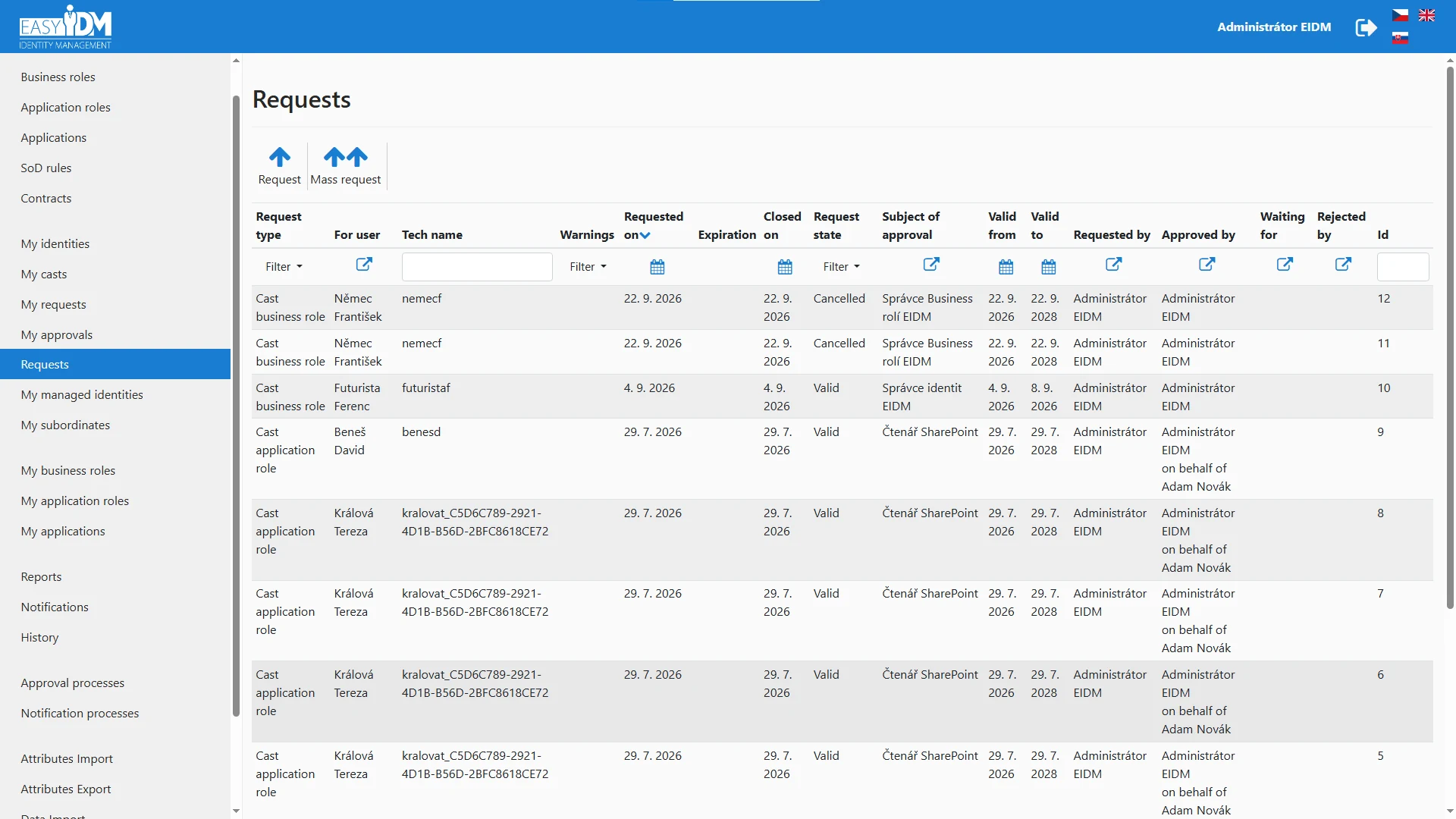
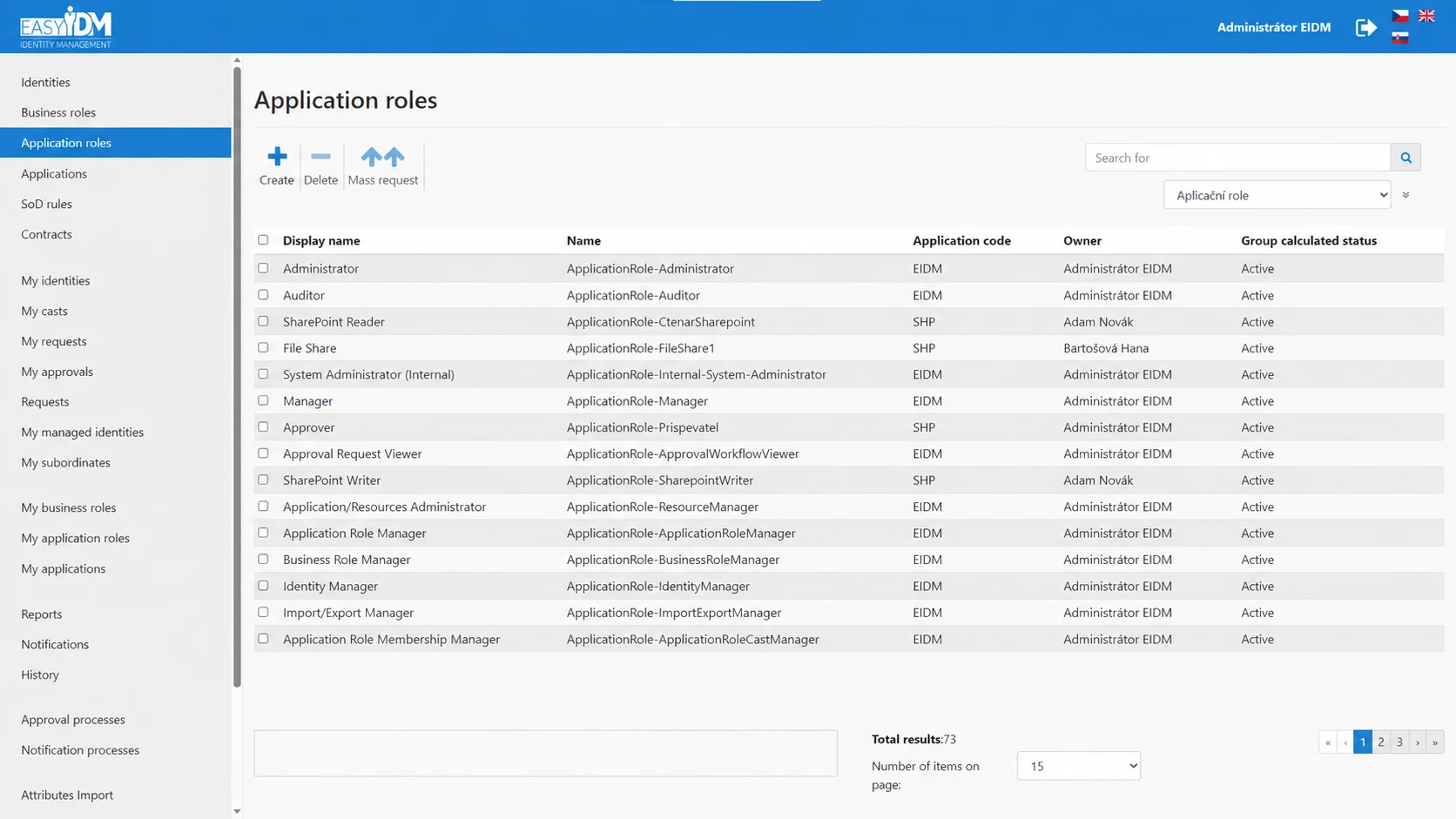
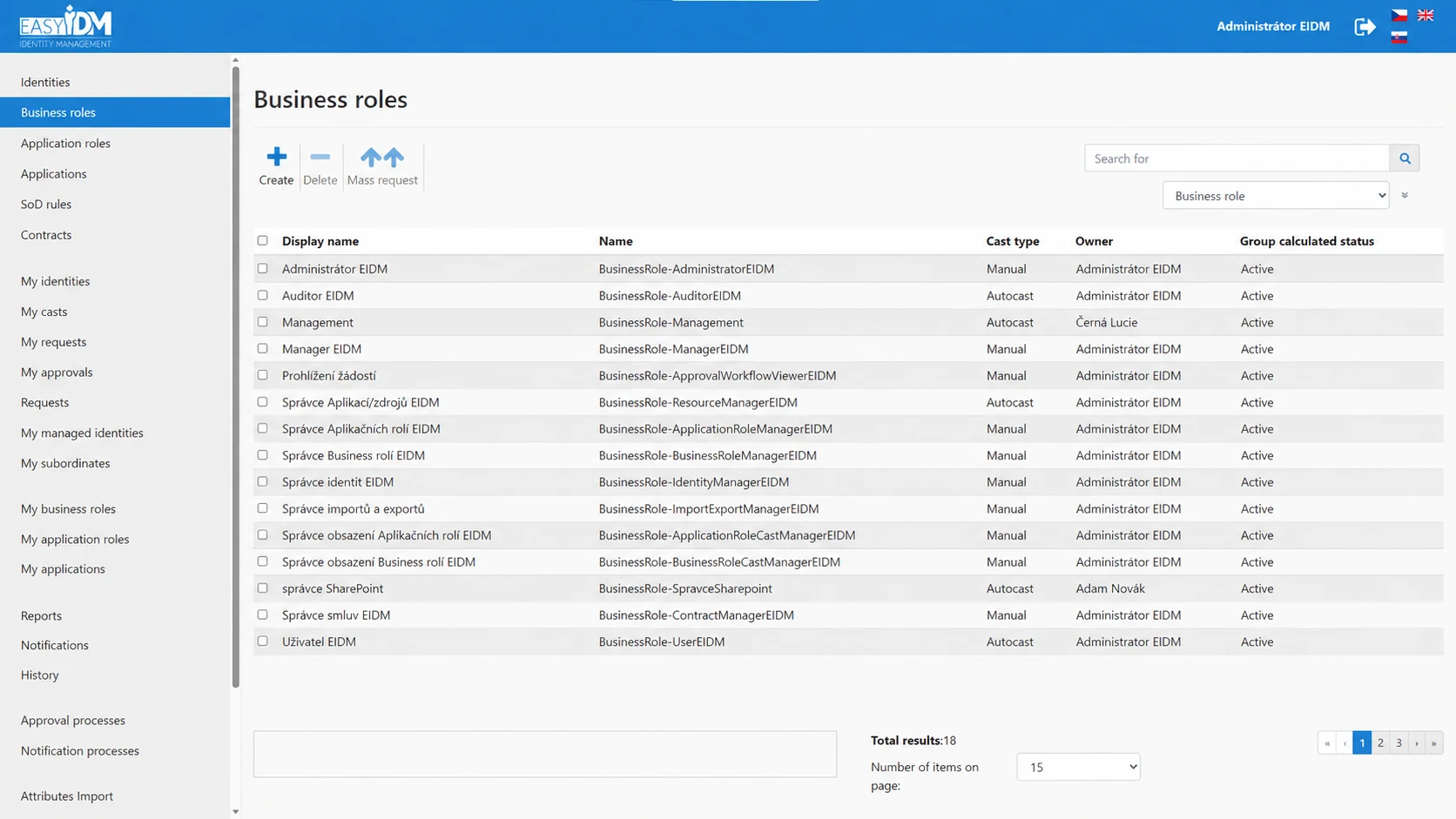
User Portal
Core Capabilities
1. Onboarding & Offboarding Automation
New employees get access from day one – intelligent workflows create accounts and assign permissions across target systems automatically. When someone leaves, EasyIDM revokes access across connected systems, removing the risk of dormant accounts sitting unused and unmonitored.
2. Smart Role Mining
EasyIDM analyses real data from HR and connected applications, identifies access patterns, and proposes business roles based on how access is actually used – then maps those roles to application-level permissions. Role design stops being a manual guessing exercise.
3. Segregation of Duties (SoD)
EasyIDM actively enforces SoD principles: the system monitors and blocks incompatible combinations of roles and permissions for a single user – for example, preventing one person from both submitting and approving the same financial request.
4. Attribute-Level Audit & Compliance
EasyIDM doesn’t just log high-level changes – it records, filters, and exports logs down to individual attributes, showing the previous value, the new value, the exact time of change, and who made it. That level of detail is what makes audits straightforward and helps organisations demonstrate compliance with regulations such as the EU’s NIS2 directive.
5. A Bridge From Microsoft Identity Manager (MIM)
Already running MIM and considering what comes next? EasyIDM lets you export existing notifications, connectors, and attributes from MIM and bring them into a modern, model-driven platform – without rebuilding your integration layer from scratch.
Deployment That Fits Your Environment
EasyIDM runs on-premise, in the cloud, or in a hybrid setup – the architecture doesn’t force a single deployment model. Organisations with strict data-residency requirements can keep everything on-premise; others gradually shift components to the cloud as it makes sense for them.
Built for Regulated, Complex Environments
EasyIDM is used across government, banking, energy, transport infrastructure, and healthcare – from organisations with a few dozen users to enterprises managing well over 100,000 identities.
FAQ
Do we have to design business roles manually?
No. EasyIDM’s Smart Role Mining analyses real access and HR data, identifies access patterns, and proposes business roles based on how access is actually used. The resulting roles are mapped to application-level permissions, so your team reviews and refines proposals instead of starting from a blank sheet.
Can EasyIDM connect to systems like SAP or Active Directory?
Yes. EasyIDM includes a library of pre-built, configurable connectors for systems such as Active Directory, LDAP, SAP BAPI, and SQL databases, and can be extended to additional systems as needed.
See It Running on Your Own Data
We’ll walk through model-driven configuration in practice, generate a permissions matrix based on your organisation’s actual roles, and map out how EasyIDM would fit your environment.